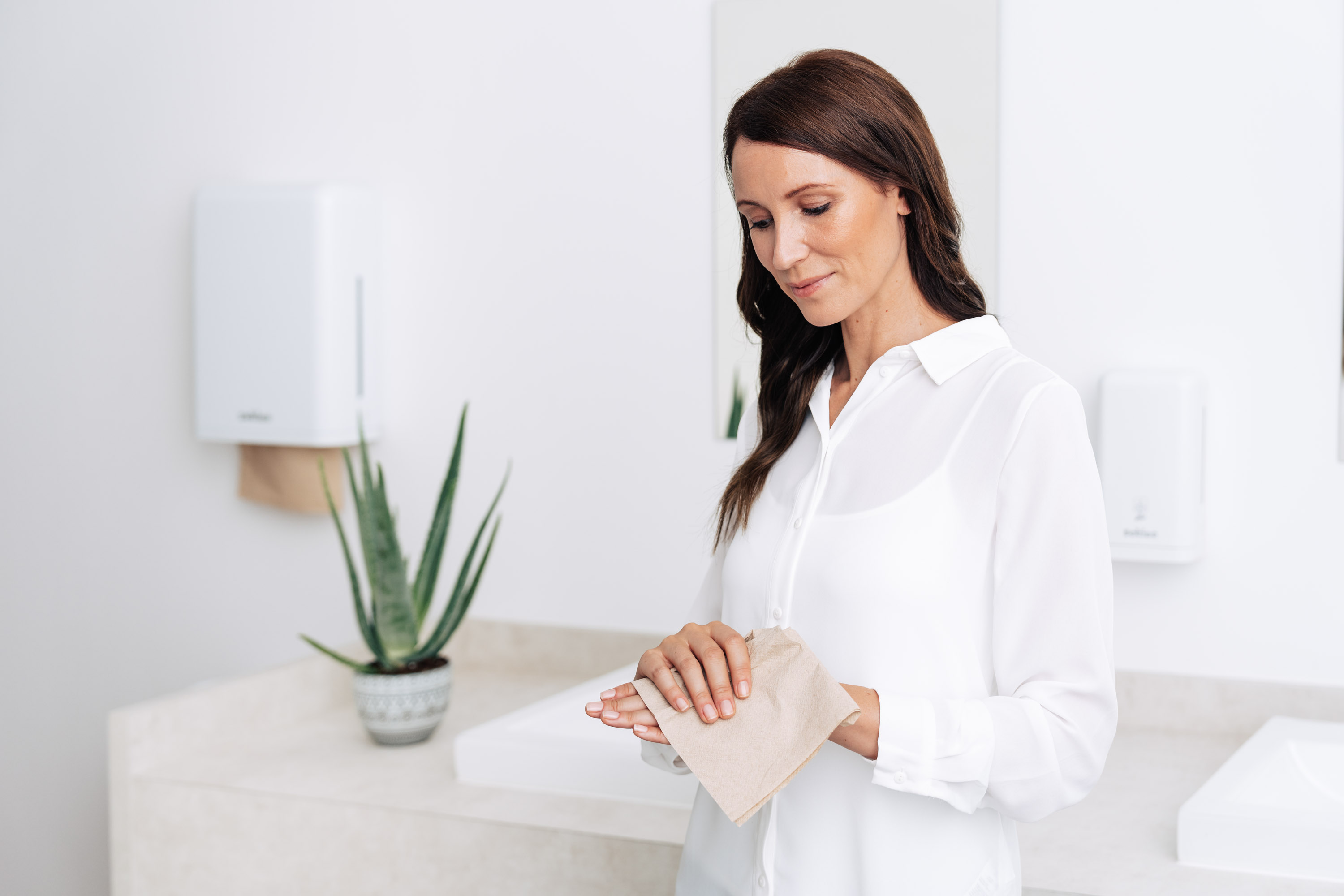
Hygiene does not depend on the colour
The notion that only white hygiene paper is hygienic remains persistent. However, the colour is irrelevant: what truly matters are the high temperatures and the strict production standards that WEPA prioritises to ensure the superior quality of all its products—whether recycled or virgin fibre papers.
Organisations such as the World Health Organization (WHO) and the Robert Koch Institute (RKI) recommend disposable hand towels regardless of the type of fibre used, as hygiene remains consistent.*
Why is hygiene paper often pure white?
White hygiene papers are primarily a matter of habit and aesthetics. Many consumers associate the colour white with cleanliness, even though it has no impact on hygienic properties.
The white colour is often achieved through bleaching processes—a step that is deliberately omitted in recycled products such as Satino PureSoft. Satino PureSoft is characterised by its natural beige colour, a visible sign of the environmentally friendly decision to forgo bleaching agents. This reduces environmental impact while maintaining uncompromised hygiene standards.
Hygienic and sustainable: Spotlight on recycled paper
Recycled hygiene paper, such as Satino PureSoft, uses fibres derived from cardboard that have been recycled multiple times. These fibres originate from packaging and boxes, which are processed using innovative methods.
The result: a soft, absorbent, and skin-friendly hygiene paper. Thanks to modern manufacturing processes, PureSoft matches virgin fibre products in terms of quality. Consumer tests consistently confirm that while the colour stands out, it is becoming less of a factor in purchasing decisions, with sustainability and functionality taking priority.
Reliable hygiene – regardless of fibre type
Whether made from virgin fibre or recycled paper, the level of hygiene remains consistently high. The key factors lie in the manufacturing process, such as cleaning and the high temperatures that reliably eliminate germs and bacteria. Certifications, such as the Dermatest seal, further confirm the skin-friendliness of hygiene paper, proving its suitability even for sensitive skin.
The colour of hygiene paper says nothing about its hygiene. In fact, recycled paper offers a more sustainable alternative while meeting the highest standards of hygiene and quality. Satino PureSoft shows that it’s time to rethink old habits: hygienically clean, sustainablyproduced, and suitable even for sensitive skin.
How cardboard is transformed into new, safe hygiene paper
Would you like to learn more about how our sustainable hygiene paper Satino PureSoft is made? In this short video, we take you through the process—from the preparation of recycled cardboard fibres to the finished product:
How Satino PureSoft is made (Video)
*Source: WHO New_HandWash_Poster, RKI: Händehygiene in Einrichtungen des Gesundheitswesens (2016)